Voice Payments
Designing a Resilient Payment Update Conversation for an Automated Voice System
Domain: Retail membership + payments
Surface: Automated phone system (IVR)
Focus: Conversational flow, intent resolution, error recovery, trust
Role: Senior Content Designer / Conversational Designer
TL;DR
Diagnosed that a "conversational design" problem in the IVR was actually a system architecture problem — members were being transferred twice because eligibility checks lived in the wrong place
Partnered with Product and Engineering to move checks upstream and automate three previously agent-only flows, reducing transfers from 2 to 0 for eligible renewal and upgrade paths
Closed a critical voice-channel gap in the broader Auto-Renew for All initiative, contributing to its 95%+ card-on-file and 91%+ enrollment outcomes
The Challenge
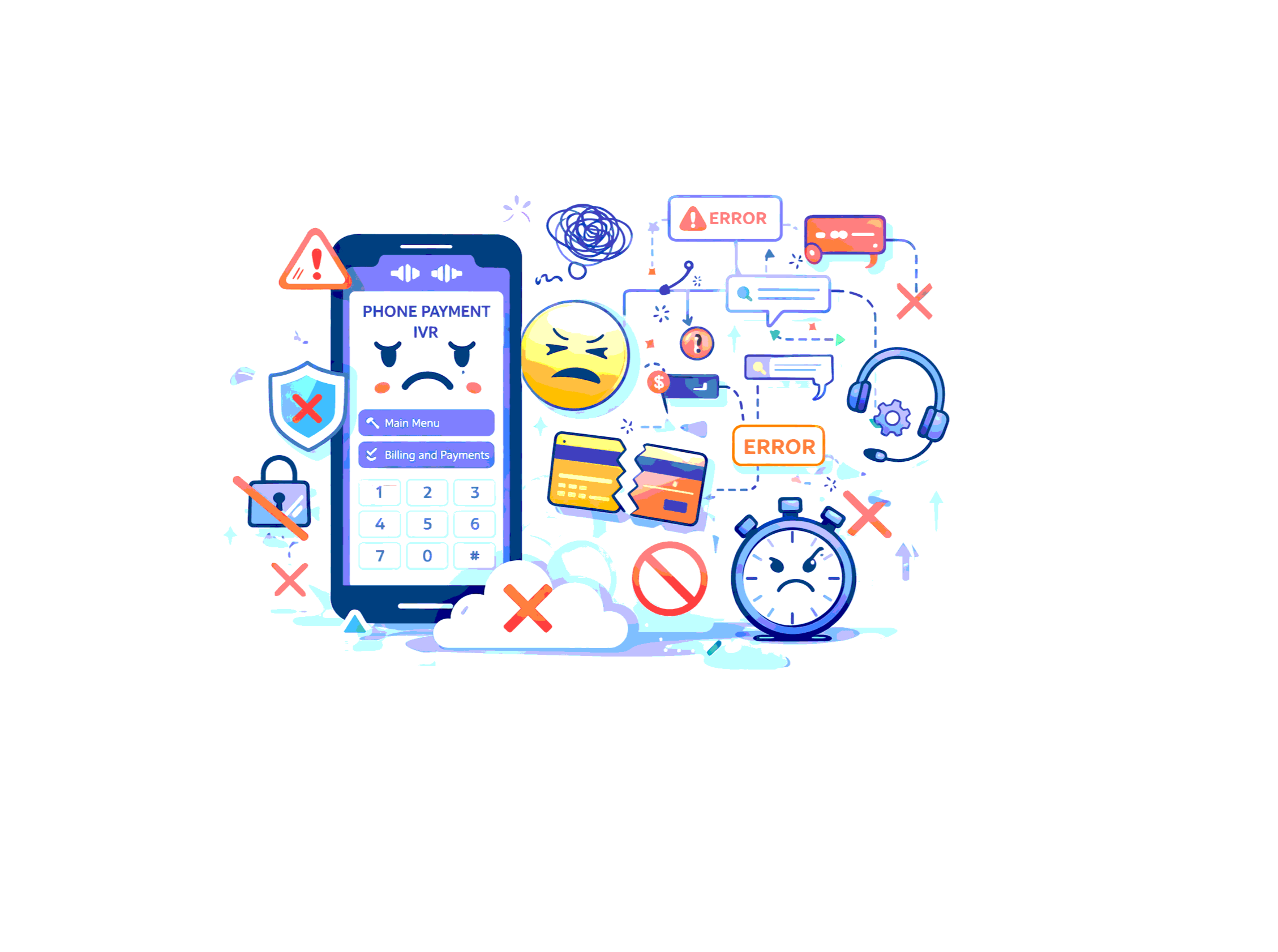
As Sam's Club rolled out its Auto-Renew for All strategy, capturing and maintaining a valid card on file became load-bearing for renewal success, FTC compliance, and member trust. Digital and in-club channels were being redesigned to support this, but the voice channel had a gap that would have quietly undermined the whole initiative.
Members calling to renew or upgrade were getting transferred twice: first from the dialog line to the payment line, then again when the payment line's eligibility check determined they couldn't self-serve. By the time they reached a live advocate, they'd already repeated themselves two or three times. The IVR looked like a scripting problem on the surface — confusing language, repeated data entry, high transfer rates — but the root cause was sequencing. Content couldn't fix where a check lived in the system.
I was brought into the help and support space specifically to close this gap before it became a drag on the broader auto-renew rollout.
My Role
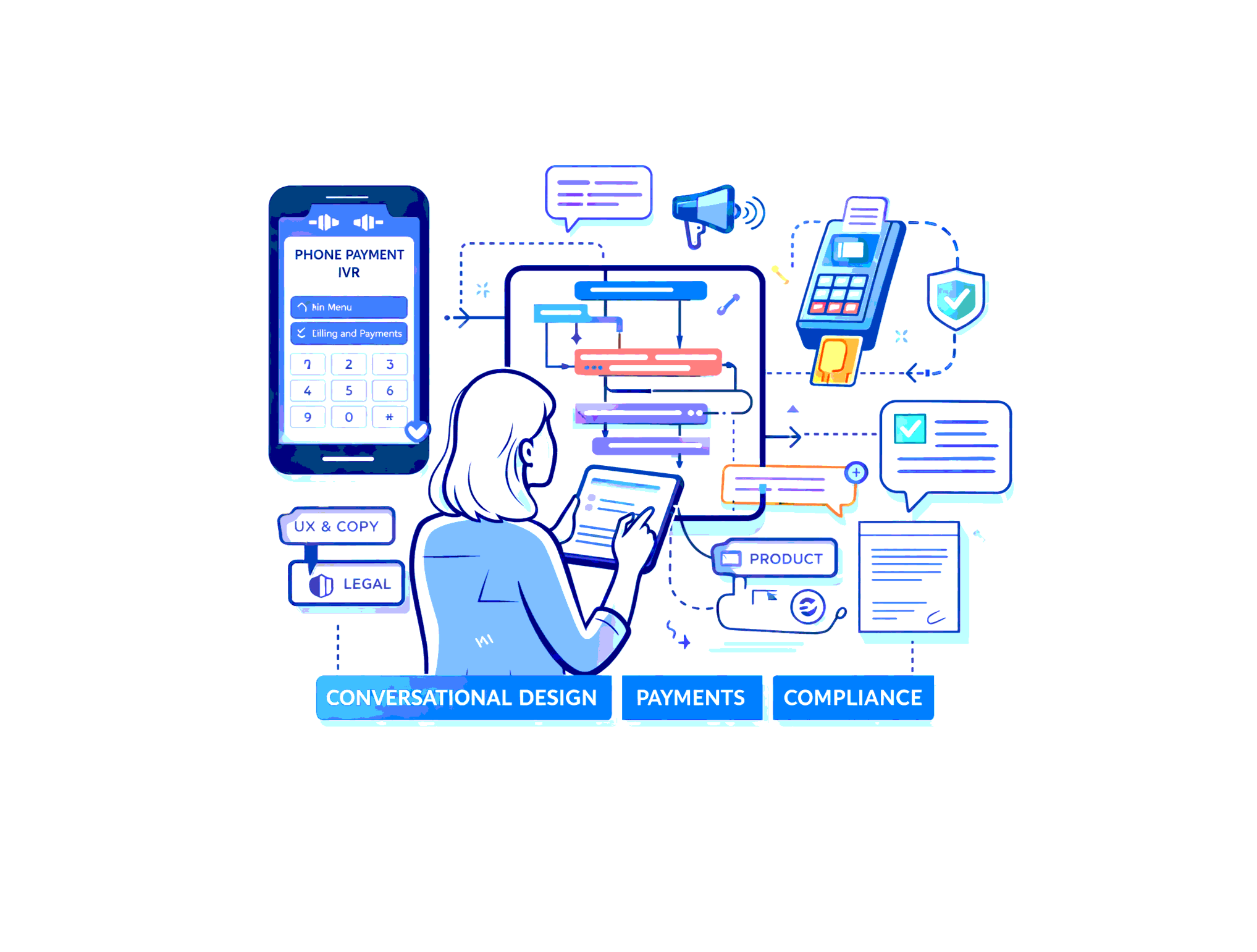
I owned the conversational and system redesign of the automated phone payment flow. My job wasn't to rewrite prompts — it was to diagnose why the existing scripts couldn't succeed no matter how well-written, and to get the underlying flow changed. That meant partnering with Product, Engineering, Legal, and Operations to redesign where decisions happened in the system, not just what the system said when they happened.
The Approach
-
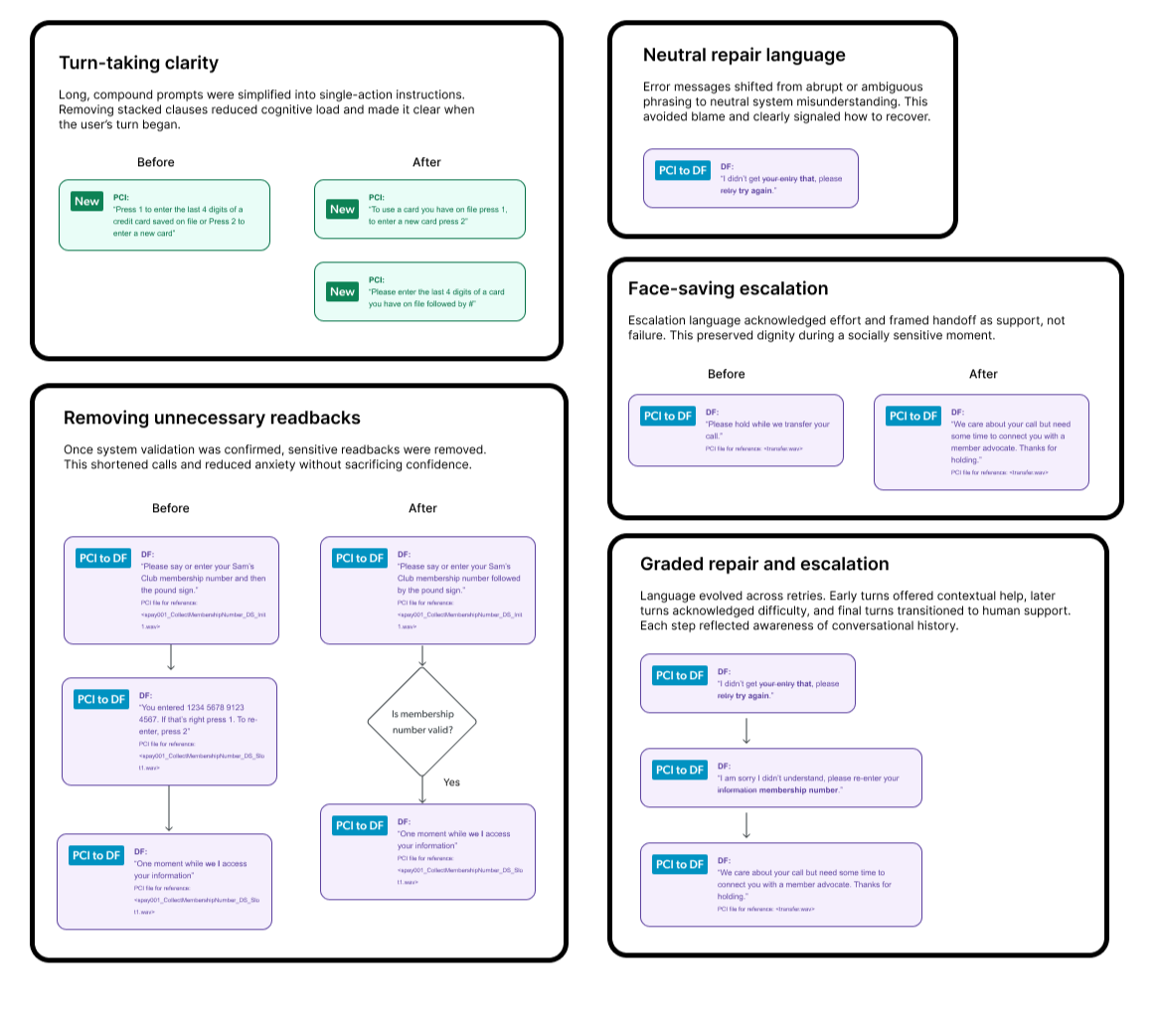
The repetition and failed transfers members were experiencing looked like a scripting issue. The root cause was sequencing: the eligibility check that determined whether a member could self-serve was happening after the first transfer, which meant ineligible members got transferred twice; once to payment, again to an advocate. No amount of rewriting would fix that. I partnered with Product and Engineering to move the eligibility check upstream, before the first transfer, so members reached the right endpoint on the first attempt. This single architectural change eliminated an entire class of failed flows.
-
Once the eligibility check moved upstream, we could see which "transfers to an advocate" were actually just information requests a live person didn't need to handle. Three use cases stood out: members already on Plus who called to upgrade, members outside their renewal window, and members already enrolled in auto-renew. In each case, an advocate was reading a single fact off a screen. I designed automated responses for these flows, reducing transfers from 2 to 0 for eligible paths and freeing advocate time for the interactions that actually needed a human.
-
With the architecture fixed, the conversational redesign could do its actual job. I restructured the remaining flows as intent-aware conversations rather than rigid scripts. The system first determines whether a valid card exists, then adapts accordingly. The tradeoff was more complex state logic for Engineering to maintain; the payoff was that the IVR stopped forcing every member through the same linear path regardless of where they actually were in the membership lifecycle.
-
Most IVR systems repeat the same prompt on failure, which is cheap to build and deeply frustrating to use. I designed the error flow to adapt language across attempts and escalate only when repetition stopped being useful. The risk was that more nuanced error handling is harder to QA across every branch; the mitigation was tight documentation and a bounded retry pattern that couldn't fail open into infinite loops.
-
Language throughout the payment flow had to do double duty: explain why a card was required (for FTC-compliant consent), how it would be used (to preserve trust), and what would happen next (to set expectations) — without adding the kind of friction that drives members to hang up and call back. I aligned the IVR's framing with the language patterns used in digital and in-club surfaces so members got a consistent answer regardless of channel.
Impact
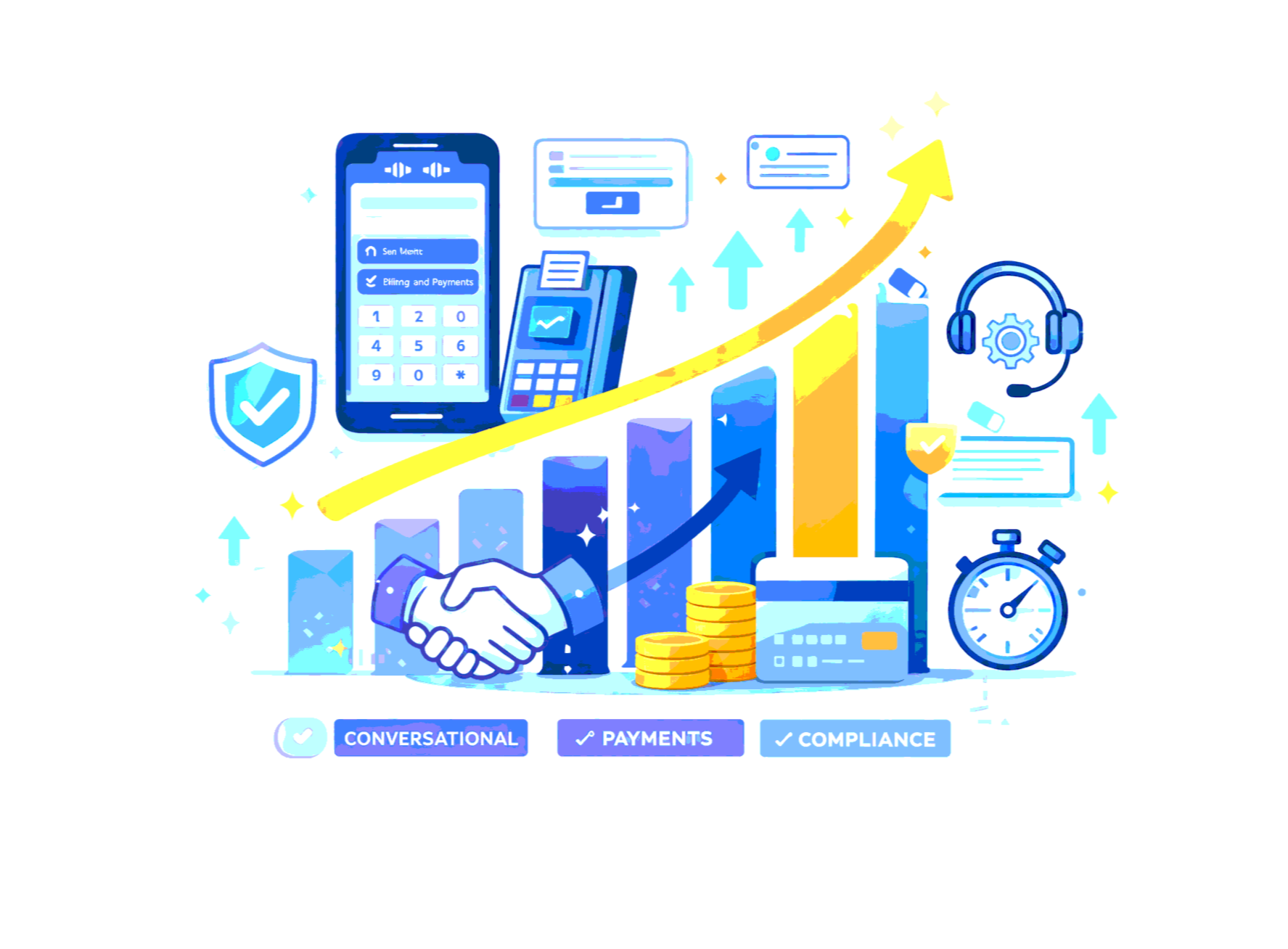
Transfers reduced from 2 to 0 for eligible self-service renewal and upgrade flows
Eliminated repeated data entry by establishing information-sharing between the dialog and payment phone systems
Automated three previously agent-only use cases (existing Plus members, out-of-window renewal, active auto-renew status)
Reduced call center load during the peak Auto-Renew for All enrollment push
Contributed to the broader Auto-Renew for All outcomes: 95%+ card-on-file rates, 87% transaction success, and 91%+ auto-renew enrollment
Established a more resilient IVR model that could absorb future membership and compliance changes without requiring a full flow rebuild
Why this matters
Conversational design isn't limited to chat interfaces or AI assistants or only about language. The highest-risk conversations often happen in voice systems, at the exact moments where payments, renewals, and compliance collide. The lesson from this project is that when a script can't be written well enough to fix a flow, the problem usually isn't the script. It's where decisions live in the system.
Moving the check upstream wasn't a content decision. But identifying that it needed to move — and building the case for the change across Product and Engineering — was exactly the work a content designer should be doing at scale.